Agape Black Belt Center
History of TaeKwonDo
Agape Black Belt Center
In Korea, following the Korean War in 1945 numerous martial arts schools known as ‘kwans’ emerged each with their own particular style, but also with underlying similarities and philosophies. As a move toward a stronger nationalism, in 1955 several of these Kwan masters got together to form one organization that would represent a national Korean Martial Arts organization. Several names were considered for this sport and “Tae Kwon Do” was finally decided upon in 1956.
History of TaeKwonDo
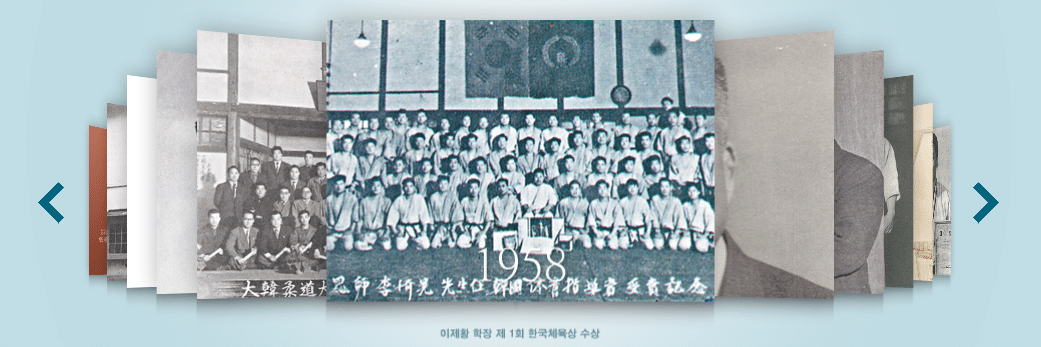
During this same time, a need was recognized in Korea for formal education in the area of physical education. In 1953, Dr. Je-Hwang Lee founded the Korea Yudo College in Seoul, South Korea. The Korea Yudo College began as a two-year college specializing in physical education. However, it wasn’t long before the need for people with a four-year degree was recognized, and by 1956 the Korea Yudo College became a four-year college with its first class of four-year students graduating in 1958. Dr. Lee did much to promote the study of Judo in Korea as well as encouraging the study of physical education as a career for college students. Students at the College also worked with the local Police department and the military as trainers in Dr. Je-Hwang Lee the martial arts. Many of the college students had their tuition waived if they agreed to serve and teach in the Korean Army. Dr. Lee formed the Dae Myung Judo Club at KYC.
The purpose of the Dae Myung Club was to give the students an organization through which they could compete and perform demonstrations. Students from the college also taught physical education programs in other colleges, high schools, and junior high schools. Students from KYC were sent out to as many as 60 to 80 different countries to teach Judo and physical education. Martial Arts clubs in those countries that were called by the name of Dae Myung were recognized by the Korean Judo Association. Korea Yudo College eventually became known as Yong-In University and is still recognized for its superb physical education program as well as excellence in other academic areas. One of the early practitioners of Judo at the Korea Yudo College was Park, Jae-Ho.
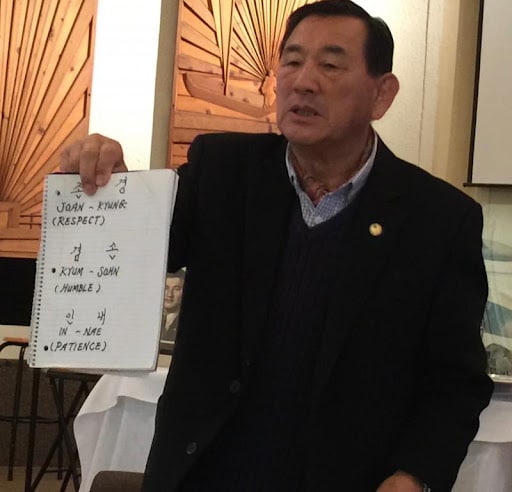
Grand Master Park, Jae-Ho
Grandmaster Jae-Ho Park was born on November 5, 1937, in Kyung-Book Province, South Korea. He began studying traditional Korean wrestling (Ssireum) at the age of seven in 1944. During his junior high and high school years, Grandmaster Park was an active soccer player and earned his 1st Dan black belt in Judo while still in high school.
In 1953, Grandmaster Park began his formal Judo training in Daegu, South Korea, followed by Tang Soo Do training in 1954. From 1958 to 1961, he served in the Republic of Korea Navy and received an honorable discharge.
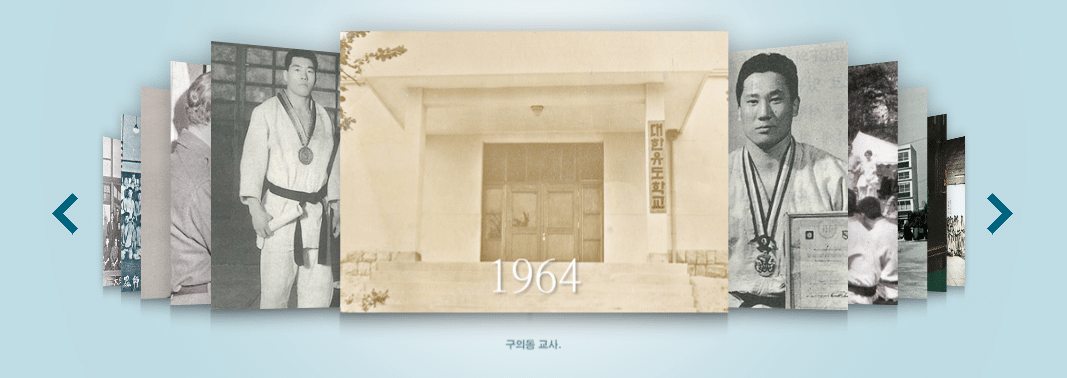
Following his military service, Grandmaster Park enrolled at Korea Yudo College, where he studied physical education and graduated in 1964. He graduated at the top of his class, earned his 4th Dan black belt in Judo, and was invited to remain at the college as an assistant instructor.
From 1963 to 1968, Grandmaster Park taught Judo at the U.S. Eighth Army base in Seoul, South Korea. He also served as a martial arts instructor for the Republic of Korea Navy and the United States Marine Corps personnel stationed in Korea.
Between 1964 and 1968, Grandmaster Park expanded his teaching career by providing martial arts instruction at the Seoul Metropolitan Police Academy, Seoul National University, and Yonsei University.
In May 1967, Grandmaster Park was selected as a member of the Korean Judo Demonstration Team, traveling to Vietnam and the Philippines to conduct martial arts demonstrations.
In April 1968, Grandmaster Park received an invitation from the United States Judo Association to visit various cities across the United States, where he conducted demonstrations, provided instruction and coaching, and offered technical consultation.
Grandmaster Park eventually settled in Chicago, Illinois, where he taught Judo to members of the Chicago Police Department. He also served as a Judo instructor at Chicago University and as a physical education instructor at St. Joseph High School in Chicago.
In addition to his teaching responsibilities, Grandmaster Park served as a coach for the Five-State Black Belt Association, further contributing to the development and promotion of Judo and martial arts throughout the United States.
Montana (1969–1973)
Grandmaster Park left Chicago to accept a teaching position at Eastern Montana College in Billings, Montana, where he taught physical education, including soccer, Judo, and Karate.
Before arriving in Billings, Grandmaster Park visited and stayed with Dr. Kung Ho (Ken) Min in Bismarck, North Dakota, whom he had met previously. Dr. Min, the founder of the Northwest Taekwondo Association, was leaving Eastern Montana College to accept a position at the University of California, Berkeley.
From September 1969 to June 1973, Grandmaster Park served as a physical education instructor at Eastern Montana College, which later became Montana State University Billings. During his tenure, he founded the Northwest Martial Arts Association and the Montana State Judo Association, contributing significantly to the development and promotion of martial arts throughout the region.
In addition to his responsibilities at the college, Grandmaster Park served as a martial arts instructor for the Billings Police Department, providing specialized training to local law enforcement officers.
California (1973–Present)
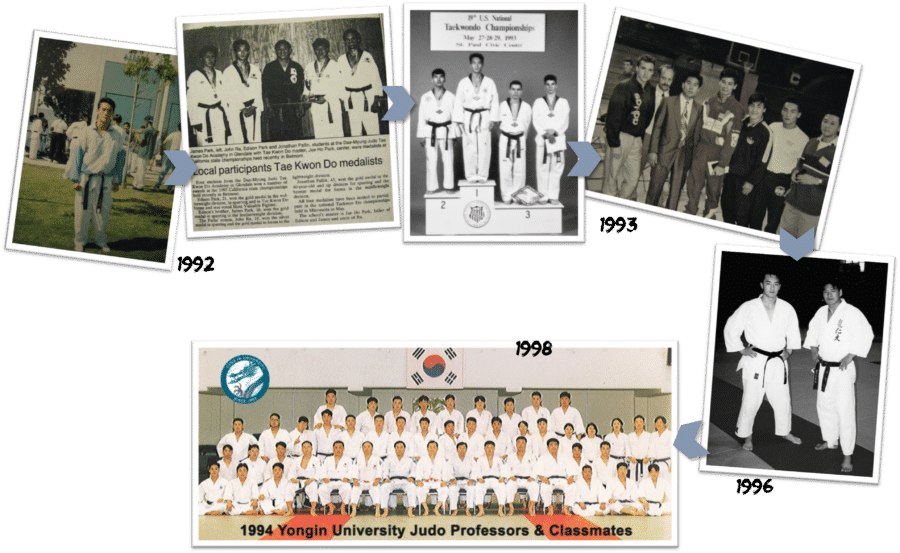
In 1973, Grandmaster Park resigned from his position at Eastern Montana College and relocated to Glendale, California, where he founded the Dae-Myung Martial Arts Academy, offering instruction in Judo, Taekwondo, and Hapkido.
From 1974 to 1989, Grandmaster Park served as a self-defense instructor for the Glendale Police Department, providing martial arts and self-defense training to law enforcement officers.
During this period, Grandmaster Park also became the first President of the Korean Ssireum Association, U.S. Branch, promoting traditional Korean wrestling throughout the United States. From 1990 to 1991, he served as President of the Southern California Korean Judo Association, further contributing to the development and advancement of Judo in the region.
From 1992 to 1999, Grandmaster Park served as Head of the Committee of the World Martial Arts Federation, supporting the growth and international recognition of martial arts.
In 1995, Grandmaster Park founded the International Dae-Myung Martial Arts Federation and became its founding President, a position he has continued to hold according to the original biographical record.
Also beginning in 1995, Grandmaster Park served on the Advisory Council on Democratic and Peaceful Unification of Korea, Los Angeles Chapter, contributing to community engagement and efforts promoting peaceful Korean reunification.